A musical about the songs the world forgot

In a city where a hidden system decides what music deserves to be heard, one secret Archive holds everything the world rejected.

Beneath the city lies a digital cathedral of music: songs too strange, too fragile, too human to survive the system’s rules. Rowan is the keeper of that forgotten music. When one song escapes the vault, the city begins to change.

The Magic of Nothing is conceived as a projection-led theatrical event built around a single transforming scenic world — visually rich, emotionally immediate, and scalable from mid-scale theatre to West End.

The Archive A cathedral of music made from light.

Story

A city shaped by taste, control, and the fear of surprise.

In the near future, music is filtered by an invisible cultural system that decides which songs reach the world. Anything imperfect, unusual, emotional, or unpredictable disappears.

Hidden beneath the city is the Archive: a living vault of forgotten music stored as light, notation, and memory. Rowan has spent years cataloguing what the system rejected. When those songs begin to escape, the city starts to listen again.

Music

Four portals into the score.

These demos introduce the musical language of the show through its central voices: Elias, Rowan, Mia, and one ensemble number in which the city itself begins to awaken.

Demo 1

Elias

The architect of taste

Elegant, intelligent, and quietly intimidating. Elias believes the system protects culture from chaos.

Demo 2

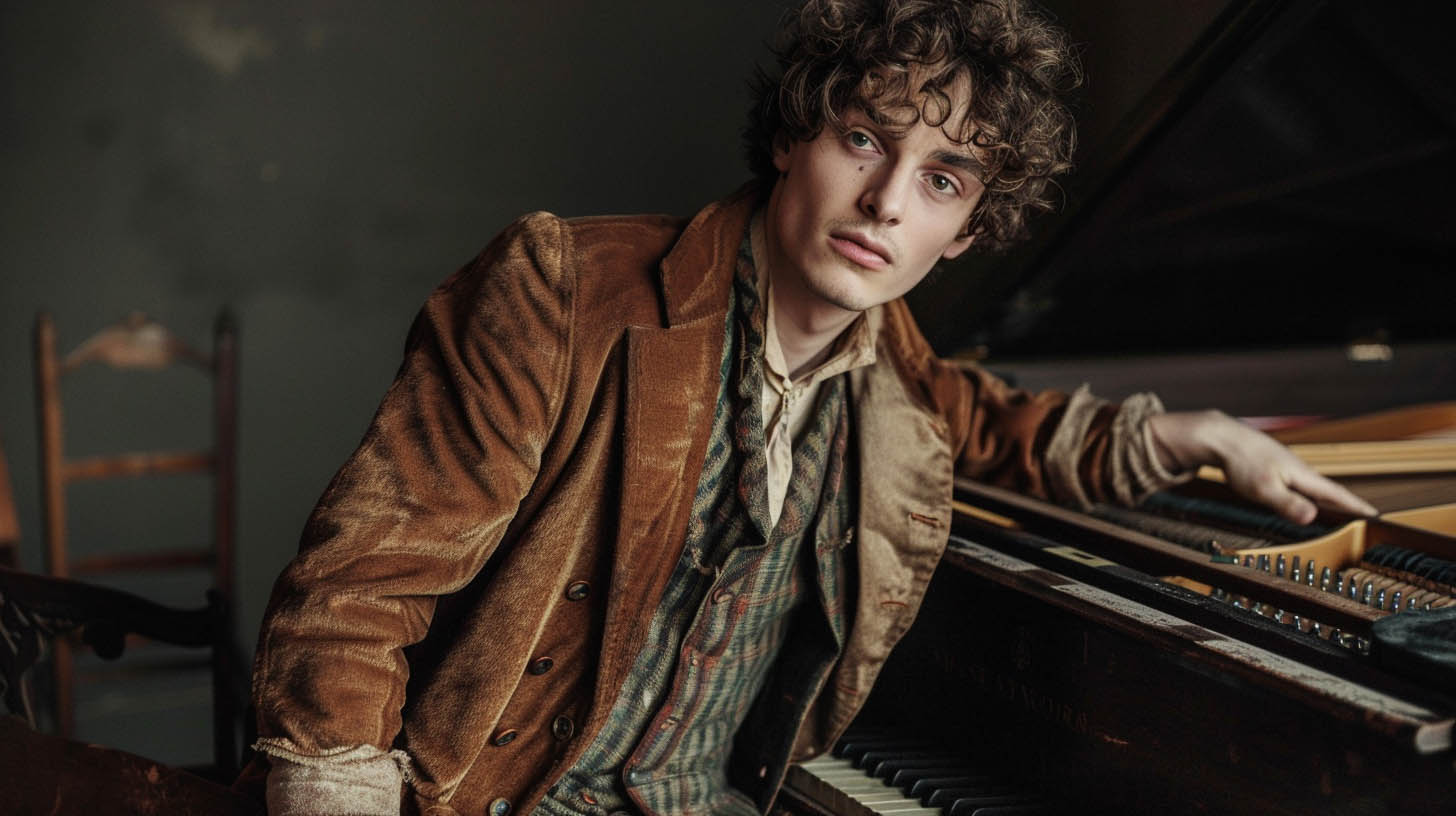
Rowan

Keeper of the Archive

Thoughtful, searching, and quietly brave. Rowan hears beauty where the system hears nothing.

Demo 3

Mia

The voice that breaks through

Immediate, modern, and emotionally recognisable — the human voice that gives the story lift.

Demo 4

Ensemble

The city awakens

As forgotten songs spread, the city shifts from control to wonder, and music returns to public life.

Worlds

One transforming set. Four visual worlds.

The production is designed around a single central architecture that transforms through projection, lighting, scenic layering, and performer flow. These images describe the visual language of the show, not literal scenery builds.

The Archive

A digital cathedral of music.

Vertical illuminated columns, glowing score fragments, suspended notation, warm amber light, and a central piano platform. A place where songs exist as architecture.

The System

Control through geometry.

Cold white light, elegant angles, sharp lines, and projection grids. The same world seen through rules, order, and perfected taste.

The Rooftop

The breath of the show.

String lights, sky, planters, and city glow. A human space of stillness, connection, and quiet theatrical surprise.

The City

Music spreading into public life.

Colour enters the skyline. Notes, particles, and light begin to appear across the city as the system’s control starts to fracture.

Characters

Three visual forces at the centre of the musical.

The production’s costume language helps tell the story immediately: Elias as control, Rowan as discovery, Mia as expression.

Elias

Order

Tailored, monochrome, precise. A figure of cultural authority whose control is elegant rather than overtly futuristic.

Rowan

Discovery

Layered, textured, and quietly worn. Rowan feels human, curious, and creatively alive within the Archive world.

Mia

Expression

Modern performer energy, colour, and movement. Mia’s costume language gives the score its visible pulse.

Design Approach

A theatrical spectacle built through design intelligence.

Set

One central architecture capable of holding intimacy, scale, and transformation.

Projection

Not wallpaper, but narrative action: notation, particles, grids, skyline shifts, and visual music.

Lighting

Warm amber for the Archive, cool geometry for the System, and gradual colour spread as the city awakens.

Costume

A visible emotional arc: control, curiosity, expression, and ensemble transformation.

Production Vision

A new musical designed for wonder, built for the stage.

The Magic of Nothing is conceived as a projection-led theatrical production built around a single transforming set, allowing the show to create a visually expansive world while remaining practical for mid-scale theatres and scalable for larger houses.

A musical about listening again.